About the Concert: G.F. Handel’s Messiah / El Mesı́as, December 7, 2025
Soloists & Music Director

Maria Brea
Maria Brea, soprano, is one of Venezuela’s most acclaimed opera singers. Praised by OperaWire as a “very classy,” “versatile,” and “luxurious” artist, she continues to captivate audiences across North America and abroad. A Juilliard graduate, she has appeared on major stages including Carnegie Hall, Symphony Hall, The Metropolitan Opera, Teatro Liceu, David Koch Theater, and Palais Garnier, enchanting listeners with her radiant tone and expressive artistry. Her debut album, Alba Beyond Borders (Lexicon Classics), explores Latin American and Jewish repertoire with pianist Dror Baitel. Following its release, Alba has toured across the United States in more than ten cities to enthusiastic acclaim. Brea’s signature roles include Violetta (La Traviata), Euridice (Orfeo ed Euridice), Ana María (Zorro), Mimì (La Bohème), Nedda (Pagliacci), Gilda (Rigoletto), Liù (Turandot), Agrippina (Agrippina), and Donna Anna (Don Giovanni). Her collaborations span Arizona Opera, Opera San José, Opera Maine, West Bay Opera, Opera Tampa, Palm Beach Opera, and Wolf Trap Opera, among others. She has appeared with leading orchestras and symphonies including the Boston Philharmonic, Phoenix Symphony, Brooklyn Symphony, Ann Arbor Symphony, Manitoba Chamber Orchestra, Pacific Symphony, Tucson Symphony, MidAtlantic Symphonic Orchestra, Richmond Symphony, New England Repertory Orchestra, and the United Nations Symphony among others.
Guadalupe Peraza
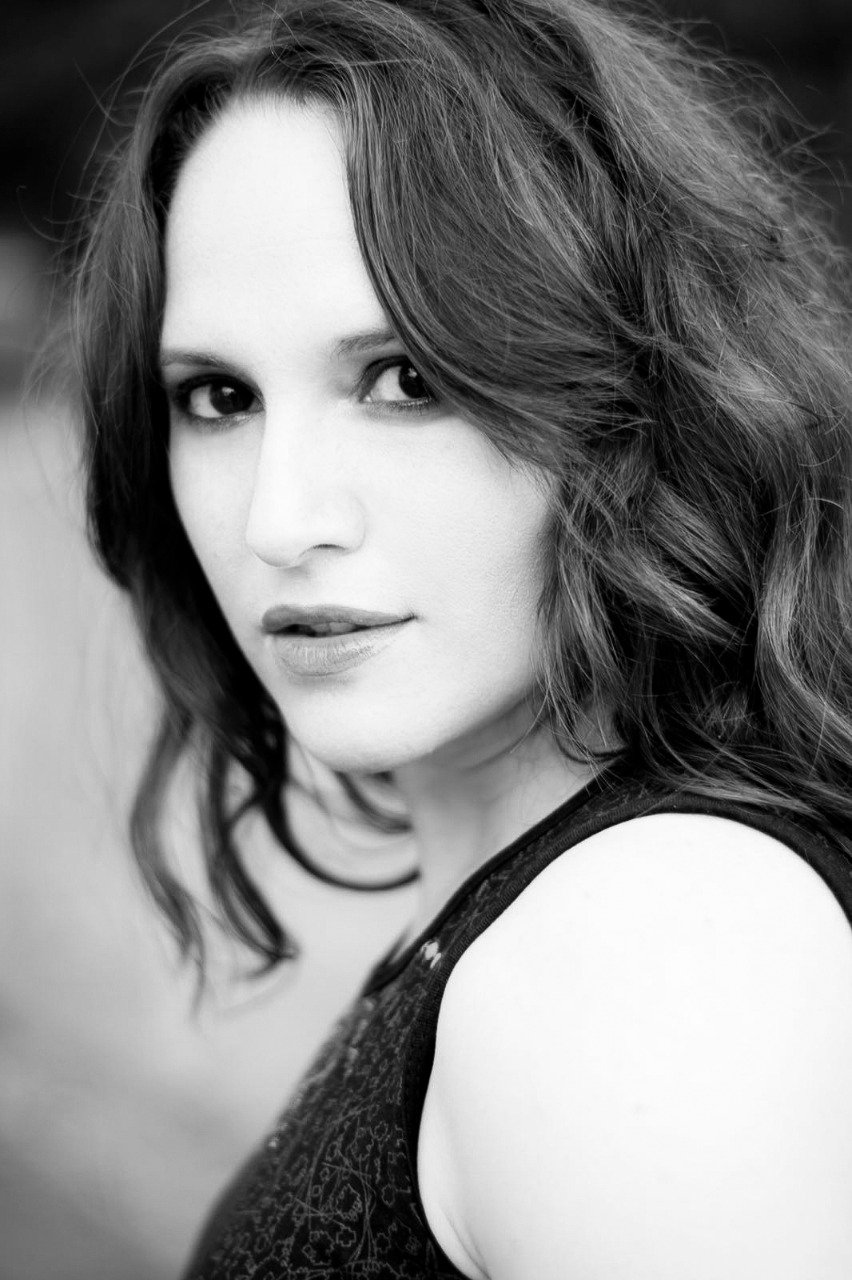
Mexican mezzo-soprano Guadalupe Peraza has performed internationally across concert and opera stages. Her 2023–25 season includes engagements with the New York Philharmonic, Mostly Mozart at David Geffen Hall, New York City Opera, and the American Symphony Orchestra at Carnegie Hall and the Bard Music Festival. She was a featured soloist at Lincoln Center’s New Latin Wave Futuros concert and with the American Classical Orchestra in 2023 and 2024, following their 2020 Chaconne Project recording. In 2021, she received the City Artist Corps Grant and appeared as a soloist with Gotham Early Music Scene’s Open Gates Project. Recent solo seasons include Mendelssohn’s Elijah and sold-out performances at Symphony Space and Mexico City’s Teatro de la Ciudad.
She created Mexamorphosis in 2016, the same year she was honored as Mexican Woman of the Year in Union City, NJ, for this initiative. Since then, Mexamorphosis has received NYSCA (2024) and LMCC (2025) awards and was featured this year by Gotham Early Music Scene, with Peraza serving as Artistic Director and presenting the project at St. Ignatius Loyola’s concert series, Musica Viva NY, Celebrate Mexico Now at the Americas Society, and other notable venues.

Cristóbal Arias
New York City native Cristóbal Arias has been heard in concert, operas and recital all over NYC and the Tri-state area. Recent operatic appearances include his debut at La MaMa Experimental Theatre Club as Moses in Finberg and Einhorn’s Exagoge, Paris in Offenbach’s La belle Hélène, Camille in Lehár’s The Merry Widow, and Misael in Britten’s The Burning Fiery Furnace.
As a recitalist, Arias has received acclaim for his interpretation of Schubert’s Die schöne Müllerin, and has a passion for presenting the work of living composers and American composers. Arias is of Colombian and Peruvian descent, and is passionate about presenting Spanish-language works.
A sought-after concert soloist, Arias has sung the Evangelist in J.S. Bach’s Weihnachtsoratorium, tenor soloist in Mozart’s Requiem, and has sung with the American Symphony Orchestra in their recent performances of Schoenberg’s Gurre-Lieder and Dvořák’s Requiem at Carnegie Hall. Arias appears regularly with the Berkshire Bach Society.
Arias is a graduate of The Juilliard School, where he studied with the late Sanford Sylvan. He is a YoungArts Winner and the recipient of a Fine Arts Award from Interlochen Center for the Arts.

Gilberto Gómez
NYC born Gilberto Gómez AKA Mr. Gómez is a dynamic vocalist, entertainer, and global showman whose commanding stage presence and artistry transcend borders. A graduate of Westminster Choir College, he began his career rooted in classical music, touring alongside the legendary Andrea Bocelli and performing in major concert halls across the United States and Europe. With a degree in Voice Performance, Gilberto has built a career that bridges classical training and contemporary spectacle.
He is currently the official host of Rauw Alejandro’s Cosa Nuestra World Tour, bringing his vibrant charisma and energy to arenas across the globe. Known for his magnetic connection with audiences, Gilberto’s work merges musical excellence with theatrical flair, creating performances that are both visually captivating and emotionally powerful.
Earlier in his career, Gilberto made history as the understudy for both Mufasa and Scar in the first-ever Spanish-language production of The Lion King, produced in Spain. His versatility as a performer has taken him from major international stages to Las Vegas, where he regularly performs for diverse audiences drawn to his dynamic voice and captivating storytelling.
Follow his latest projects and appearances on Instagram @MrGomezMC

Richard Stout
Music Director and Conductor Richard Stout studied at the University of Southern California and earned a Bachelor of Music degree in Music Education and a Master of Music degree in orchestral and opera conducting. His principal teachers were Charles C. Hirt, Daniel Lewis and Henry Holt. Richard also performed with Robert Shaw and Paul Salamunovich. He was active in southern California opera companies.
An interest in the music of Bach led Richard to study with Helmuth Rilling, who invited him to the Frankfurt Musikhochschule, where Richard completed his diploma in Choral Conducting. While in Germany, he performed on German radio broadcasts, and also in Helmuth Rilling's two principal ensembles, the Gächinger Kantorei and Bach Collegium Stuttgart. Richard was later Roger Wagner's assistant at Pepperdine University. As Visiting Assistant Professor of Music at Lehigh University, Richard performed Mendelssohn's Elijah, using his own revision of the English translation, and co-conducted the world premiere of Robert Moran's Hagoromo.
Since coming to New York, Richard's conducting credits include the "Friends and Enemies of New Music" series, and premieres of six compositions as principal conductor of the Turnpike Camerata, a contemporary ensemble. He has guest conducted the Delaware Valley Philharmonic, the Adirondack Chamber Orchestra, the Broadway Bach Ensemble, the New York Vocal Arts Ensemble in an opera performance, and recently guest conducted the New York Symphonic Arts Ensemble .
Richard was the conductor of the Third Street Music School Settlement Chamber Orchestra, whose students were trained in, and flourished in the String Department which was guided by Christiane Pors. Under Richard's baton, the orchestra performed with acclaimed soloists, including Maxim Vengerov and Claude Frank. In 2000, the Chamber Orchestra performed, as one of four invited groups from all over the U.S. and Canada, at the conference of the Suzuki Association of the Americas in Cincinnati, Ohio. Richard conducted the Sinfonia Orchestra of the Mannes College of Music Preparatory Division. In the past several years Richard has served as a guest conductor in Ottawa, Canada at concerts for the Prime Minister, and has conducted at the Canadian National Arts Centre, with noted artists Anne Murray and Holly Cole.
About the Concert
This performance by Cornerstone Chorale features a version created by Mexican musician and librettist Mario Montenegro, which combines Handel’s original music with words in the Spanish language, for a new twist!
The Chorale will perform the entire Christmas section plus other favorite parts, in Spanish. The performance will be performed with orchestra, and will feature soloists Maria Brea, soprano, Guadalupe Peraza, mezzo-soprano, Cristóbal Arias, tenor, and Gilberto Gómez, baritone. Music Director Richard Stout conducts.
Esta interpretación de Cornerstone Chorale presenta una versión creada por dramaturgo mexicano Mario Montenegro, que combina la música original de Handel con palabras en español. ¡Ésta es la obra con un toque innovador!
Cornerstone Chorale interpretará toda la sección navideña, además de otras partes favoritas de esta querida composición, en español. La actuación contará con la participación de una orquesta y los solistas María Brea, soprano, Guadalupe Peraza, mezzosoprano, Cristóbal Arias, tenor, y Gilberto Gómez, barítono. El director musical Richard Stout se encargará de la dirección.
Program Notes
Charles Jennens, Handel’s friend in London, was a devout man. He had compiled the librettos (texts) for some of Handel’s oratorios, some based on bible stories, beginning in 1735. Jennens put together a libretto that told the entire biblical story of Christ, with a particular angle: much of the early and even later part of the story uses words from first (old) testament writing, put together to imply Christian meaning. Jennens gave this to Handel, but Handel left it sitting around for 18 months. Then in 1741, Handel picked it up again, and three weeks later had the entire Messiah oratorio composed. The San Diego Camerata commissioned a Messiah libretto in Spanish, and performed it in 2022. It was meant to be based on Mexican Spanish, but expanded somewhat with influences from Iberian Spanish, to work with Handel’s music, and also be understood in two hemispheres. This is the version we bring you today.
Handel wrote a variety of vocal and instrumental music, during his student days in Germany and Italy, and also after he moved to England permanently. His English oratorios broke new ground in scale and scope, but Messiah is the most famous of all. Although the form “oratorio,” originally heard of in Italy, existed for some time before Handel, he developed it. Messiah was premiered during the lenten seaons of 1742, a time when opera performances would have been paused. So it was the right time to break out a new oratorio.
As Bach did in his larger works, so does Handel also in Messiah bring to bear elements from different countries, styles, and forms. The recitatives and arias are similar to what might be found in an opera, a largely Italian form in those days. The choruses in Messiah resemble those associated not only with opera but also with English festival anthems and even with liturgical musical styles, some from German cantata practice. Instrumental features used include the concerto grosso, and contribute to variety and interest. So one can hear the Pastorale and operatic influences of Italy, German motet style, fugal writing, and the grandeur of the English festival anthem. Corelli’s influence on Handel is very apparent, particularly in the Pifa, and in concerto-style writing even in choruses.
Handel’s special gift for making the oratorio, an essentially opera-derived form, work with no visual effects from costumes, sets, props, and movement onstage is in part achieved by vivid pictorial and emotional effects in the music itself. In the aria “¿Mas quién resistir podrá su llegada?” (“But who may abide the day of his coming?”), the text phrase “Porque es Él un crisol de fuego” (“For he is like a refiner’s fire”) uses rapid tremolo notes in the violins and violas, simulating the flickering flames of a fire. Handel had featured many such effects in his previous oratorio “Israel in Egypt” to depict various scenes using musical pictorial devices. The aria “El pueblo que estaban in tinieblas” (“Theh people that walked in darkness”) and its accompanying recitative illustrate the starkness of the words in minor key and sparse unison writing, giving a real sound to the idea of darkness. The chorus “Gloria a Dios” (“Glory to God”) sets the words of the angels “in the highest” in the highest voices of the chorus, with “pax en la tierra” (“peace on earth”) in lower voices, to show the world here below. The overture, with its snappy dotted rhythms, is in the French overture style, often used to denote presence of a king: clearly what Jennens and Handel identified with the central story. This snappy rhythm also had another meaning, particularly in the German tradition: it also represented scourging or whipping, which is associated with the passion of Christ. The chorus “Fue así” uses the patterns to show both meanings.
As the performance tradition of Messiah was nearly unbroken, its fame spread to the European continent. It was translated into German by Klopstock and Ebeling and used in an arrangement by Mozart. Although perfomed since then in other languages, including Hebrew and Hawai’ian, it has also in fact been performed in other Spanish versions. The commissioning organization of this translation, and the librettist both intended this project to build bridges between United States and Mexican cultures, and for sure the broader language realms they belong to. As Handel’s musical appeal is universal, it is univerally human. To consider the story told, and to tell it a slightly different way, is perhaps to examine and contemplate a different facet of the same shining diamond. Handel’s music brings the world closer together in its expression.